Ranking · Wellness at Home

Top 10 Red-Light Therapy Panels 2026 — Top 10

Red-light therapy panels are the most spec-inflated category in home wellness: headline irradiance figures are usually taken with consumer solar meters at the panel's hottest center point, and independent spectrometer tests routinely land at a third to a half of the advertised number. We ranked these ten panels on output you can verify — published third-party lab reports and independent measurements — alongside wavelength coverage, trial periods, and warranty support. Every irradiance figure below states the distance it was measured at and the kind of instrument behind it — with one flagged exception: Joovv publishes its figure with neither, and its card says so.

10 products ranked · Selected from 26 products screened — · Scores from verified research — how the AmRank Score works

Listen to the verdict
The #1 pick, the score, the price — and why it wins
0:00 / 0:35

Every product screened for this ranking

26 products were scored under the same AmRank rubric. The Top 10 are ranked above; the rest are listed here with the AmRank Score each one earned.

ProductCompanyPrice AmRank Score
MitoPRO 1500X ★ #1Mito Red Light$1,29993
PlatinumLED BIOMAX 900 ★ #2PlatinumLED$1,29989
Hooga PRO1500 ★ #3Hooga$1,19988
EMR-Tek Inferno ★ #4EMR-Tek$1,70085
Rouge Pro G4 ★ #5Rouge Care$1,12184
Joovv Solo 3.0 ★ #6Joovv$1,69982
BlockBlueLight PowerPanel PRO ★ #7BlockBlueLight$90081
MitoPRO 750X ★ #8Mito Red Light$74980
BestQool BQ150 ★ #9BestQool$51973
GembaRed Beacon ★ #10GembaRed$45968
BIOMAX 600
Strong mid-size panel; slot went to larger BIOMAX 900
PlatinumLED$99984
MitoPRO 1500+
Prior generation; superseded by ranked MitoPRO 1500X
Mito Red Light$1,16980
PowerPanel MAX
Prior generation; current Gen 6 PRO took its slot
BlockBlueLight$1,10080
HG1500
Single-chip full-body panel; slot went to dual-chip PRO1500
Hooga$89976
Tabletop G4
Feature-rich tabletop; small coverage and fat-loss claim hurt
Rouge Care$51667
MitoPRO 300X
Honest desktop panel; coverage too small to rank
Mito Red Light$44966
PRO750
Solid mid panel; output claims use consumer-meter basis
Hooga$59965
KOZE X Series
Capable panel; newer brand, thin owner track record
KOZE$1,14964
Kala Red Light Pro
Decent panel; maker and dealer warranty terms conflict
Kala$59963
Joovv Mini 3.0
Polished mini; $1,199 for 60 LEDs is poor value
Joovv$1,19962
BON CHARGE Max
Large panel; one-year warranty and unverified output claims
BON CHARGE$99961
PRO300
Good small Hooga; targeted size limits its ceiling
Hooga$29960
Pro100
Budget panel; irradiance quoted at three inches only
BestQool$31959
BioHeal Plus
Lifetime warranty; output marketed at surface and three inches
Lifepro$33057
Vector 4-Wave
14.4 mW/cm² at six inches; honest but low dose
GembaRed$24956
Rex 2.0
Contact-style panel; near-zero output at standard distance
GembaRed$37954

Pool prices are the prices recorded during research. Only the ranked products receive full verified reviews.

At a glance

#ProductRatingPrice Best for
1MitoPRO 1500X 93$1,299Full-body buyers who want lab-verified output instead of marketing numbers
2PlatinumLED BIOMAX 900 89$1,299Output chasers who want the broadest spectrum and modular expansion
3Hooga PRO1500 88$1,199Value-focused full-body buyers who want simple controls and honest pricing
4EMR-Tek Inferno 85$1,700Output maximalists who want the highest lab-measured irradiance available
5Rouge Pro G4 84$1,121Tweakers who want per-wavelength dimming, pulsing and preset programs
6Joovv Solo 3.0 82$1,699Design-led buyers who want the best app experience and a modular system
7BlockBlueLight PowerPanel PRO 81$900Half-body buyers who want dual-published, honest irradiance figures
8MitoPRO 750X 80$749Half-body buyers who want the 1500X's verified engineering for $550 less
9BestQool BQ150 73$519Budget buyers who want a wide, low-cost starter panel
10GembaRed Beacon 68$459Measurement purists who want published, averaged output and near-zero EMF
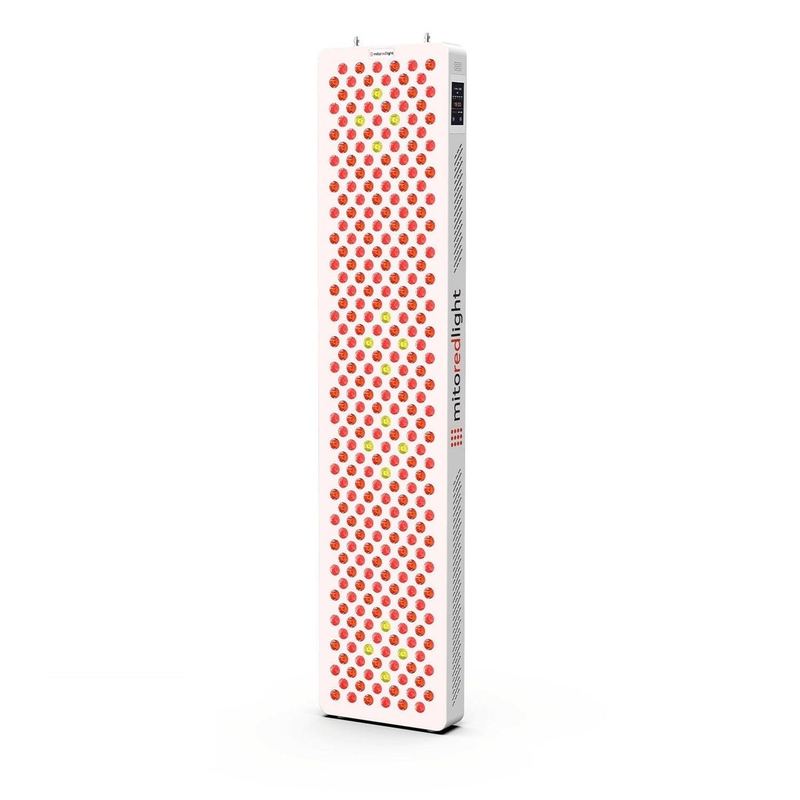
1MitoPRO 1500X product photo
#1 in Category · 2026 \u2014 American Ranking Institute award badge

MitoPRO 1500X ($1,299)

AmRank Score 93
Best for
Full-body buyers who want lab-verified output instead of marketing numbers
Score vs category
This product 93Category median 83
Price vs category
6wavelengths: 590/630/660/810/830/850nm
300dual-chip LED lenses (600 chips)
10″× 43″ panel
Lab-verified72.5 mW/cm² peak at 6″ (spectroradiometer)
ColorsWhite
Strengths
  • Publishes an accredited third-party lab report (72.5 mW/cm² peak at 6″) next to its marketing figures
  • Six wavelengths (590–850nm) with independent red and NIR channel control
  • Tall 43-inch panel covers most bodies in one standing session
  • 60-day trial and 3-year warranty, with free US shipping
  • Touchscreen plus app control with session tracking and alarm start
  • IEC 60601-certified and FDA Class II registered
Watch out
  • Solar-meter headline (over 160 mW/cm²) is more than double the lab figure — read the fine print
  • Floor stand is a $139 extra
  • The 10-inch width means wider bodies may still reposition for edge coverage
Product review

The MitoPRO 1500X is the rare panel whose spec sheet survives an audit. Mito advertises over 160 mW/cm² at 6 inches from a consumer solar meter — and publishes the accredited lab report beside it: an ISO/IEC 17025 lab measured 72.5 mW/cm² peak and 53.5 average at the same distance, with 149.4W of total radiant power. That is still among the strongest verified outputs in this ranking. Three hundred dual-chip lenses deliver six wavelengths across a 43-inch frame, with touchscreen and app control, independent red and near-infrared channels and a smart alarm. It earns the top score on verified performance and on claim discipline alike.

The company

Mito Red Light is based in Scottsdale, Arizona (9319 N 94th Way), where it has operated since 2019, selling direct to US customers with free US shipping and published phone (866-861-6486) and email support. Its 60-day trial and 3-year warranty are handled in-house. On claim discipline Mito is the category benchmark: it labels its devices FDA Class II registered rather than 'FDA approved,' prints its consumer solar-meter figures and its independent spectroradiometer results side by side, and explains why the two differ — the only major brand that quantifies its own spec inflation.

MitoPRO 1500X
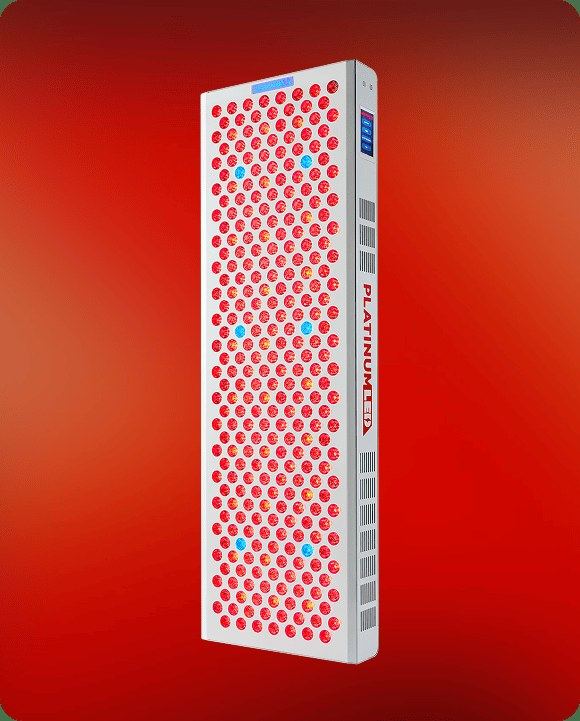
2PlatinumLED BIOMAX 900 product photo
AmRank Top Pick \u2014 American Ranking Institute award badge

PlatinumLED BIOMAX 900 ($1,299)

AmRank Score 89
Best for
Output chasers who want the broadest spectrum and modular expansion
Score vs category
This product 89Category median 83
Price vs category
7-wavelengthspectrum, 480–1060nm
300LEDs
35.8″× 11.8″ panel
Makermanual: 135 mW/cm² at 6″; ~90 measured by spectrometer
ColorsSilver
Strengths
  • Broadest spectrum ranked: seven bands including 480nm blue and 1060nm
  • Independent spectrometer measurement (~90 mW/cm² at 6″) still leads the category
  • Wide panel plus modular linking for multi-panel setups
  • Touchscreen controls, remote included, 100,000-hour rated lifespan
  • 3-year warranty and a 60-day trial
Watch out
  • The 280 mW/cm² headline appears in no maker document; the model’s own manual claims 135 at 6″
  • Output drops sharply outside the center hotspot, so coverage is uneven at 6″
  • Stands are sold separately and add up ($119–$869)
  • Trial return terms can involve fees — read the current policy before ordering
Product review

The ninth-generation BIOMAX 900 is the broadest-spectrum panel here: seven wavelength bands from 480nm blue to 1060nm near-infrared across 300 LEDs in a wide 35.8-inch frame, with touchscreen, remote and modular linking for multi-panel walls. Its output story needs translation. PlatinumLED’s marketing headlines up to 280 mW/cm², but that figure appears in no maker document we could retrieve: the model’s own manual claims 135 mW/cm² at 6 inches, and independent spectrometer testing by Light Therapy Insiders measured about 90 mW/cm² at the same distance — a verified figure that still leads this class, but roughly a third of the headline. Output also falls off quickly away from the panel's center. Scored on the verified numbers, it remains a top-tier panel.

The company

PlatinumLED has sold therapy lights since 2010 and sells the BIOMAX line direct from platinumtherapylights.com, with published phone support (+1 844-533-4769) and US warehousing; its panels are FDA Class II registered, a status its marketing generally states accurately. The 60-day trial and 3-year warranty are competitive, though return terms can include fees. Claim discipline is the mixed point: the company links lab data for its panels, yet headlines a 280 mW/cm² figure that appears in none of its own documents — its manual claims 135 mW/cm² at 6 inches, and independent spectrometer testing puts it near 90. The manual’s return terms are specific: a 20% restocking fee on elective returns, buyer-paid return shipping, a $50 fee on refused shipments, and a warranty valid only for the original purchaser buying direct or from an authorized reseller.

PlatinumLED BIOMAX 900

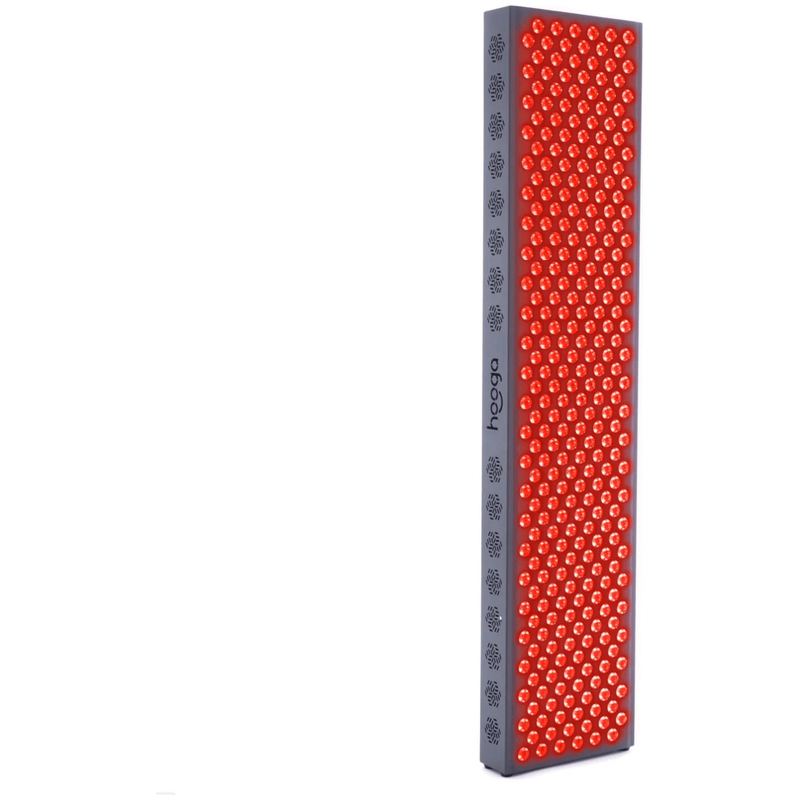
3Hooga PRO1500 product photo

Hooga PRO1500 ($1,199)

AmRank Score 88
Best for
Value-focused full-body buyers who want simple controls and honest pricing
Score vs category
This product 88Category median 83
Price vs category
660nm+ 850nm only
300dual-chip LEDs
36″× 8.6″ panel
Maker-claimed189 mW/cm² at 6″ (instrument not stated)
ColorsBlack
Strengths
  • 300 dual-chip LEDs and full-height 36″ coverage for $1,199
  • Simple, durable controls — no app or subscription required
  • Door mount and hanging kit included; modular with other PRO panels
  • 3-year warranty and 60-day returns
  • Founder-run US company with a long owner-review track record
Watch out
  • Only two wavelengths — no 810/830nm or multi-spectrum options
  • The 189 mW/cm² claim states no instrument and has no published lab verification
  • Mobile stand costs extra, and return shipping is deducted from refunds
Product review

Hooga skips the spec-sheet arms race and wins on fundamentals: 300 dual-chip LEDs in a 36-inch panel, the two most-studied wavelengths (660 and 850nm), a timer, separate red/NIR switching, and a door-hanging kit in the box. The claimed 189 mW/cm² at 6 inches comes with no instrument stated by the maker and should be discounted like every such claim — no independent lab report is published for this model — but the hardware underneath is proven and the price undercuts comparable full-body rivals. A 3-year warranty and 60-day returns from a founder-run Wisconsin company complete a package that scores on value and accountability rather than raw verified output.

The company

Hooga is a Wisconsin-based wellness technology company founded in 2018 and operated by its co-founders, selling direct from hoogahealth.com and through an Amazon storefront. Support is email- and web-based; the company does not publish a support phone line. Its 60-day return window deducts return shipping from refunds, and its 3-year warranty matches the category leaders. On claims, Hooga is comparatively restrained — it markets the classic 660/850nm pairing without disease-treatment promises — though its 189 mW/cm² headline names no measuring instrument and is not lab-verified. Open-box items are non-refundable under its policy, and international returns carry customs and duties on the customer.

Hooga PRO1500

4EMR-Tek Inferno product photo

EMR-Tek Inferno ($1,700)

AmRank Score 85
Best for
Output maximalists who want the highest lab-measured irradiance available
Score vs category
This product 85Category median 83
Price vs category
630/660/830nm
5× 200W COB modules + 132 LEDs
34.1″× 11.8″ panel
Lab-measured138.39 mW/cm² at 6″ (Light Labs Intl.)
ColorsSilver
Strengths
  • Highest independently verified output ranked: 138.39 mW/cm² at 6″ (Light Labs International)
  • Full independent lab report published by the brand
  • COB midline design holds output at realistic 12–24″ session distances
  • Self-standing on integrated pegs; door pulley kit included
  • Built-in global voltage converter
Watch out
  • No real trial: returns only within 30 days, unused and unopened
  • Perpetual '50% off at checkout' banner makes the true price unclear
  • Spec sheet lists 3.2% flicker while other brand copy claims 'zero flicker' (that figure is the PRO model)
  • US orders ship from Europe, and the warranty is 2 years, not 3
Product review

The Inferno is built unlike anything else here: five 200W COB modules run down its midline over 132 fill LEDs, behind 30-degree cone lenses. Unusually, the output claim is not the brand's own — EMR-Tek sent this exact model to Light Labs International, which measured 138.39 mW/cm² at 6 inches and 67.22 at 12, the highest independently verified figures in this ranking, and the full report is published. The trade-offs are ownership terms: a 2-year warranty, returns accepted only unused and unopened, US orders shipped from a European warehouse, and a storefront '50% off at checkout' banner that muddies its $1,699.99 shelf price.

The company

EMR-Tek is a founder-led brand (founder Kris Sweeting) selling direct from emr-tek.com; US orders are fulfilled from its Europe warehouse, and support runs through its published email, [email protected]. Standard panels carry a 2-year warranty and a strict 30-day, unopened-only return policy — there is no in-home trial. Claim discipline is genuinely two-sided: EMR-Tek publishes a full independent lab report for the Inferno, yet mixes that rigor with chakra-based marketing, and its own spec sheet lists 3.2% flicker beside FAQ copy claiming zero flicker for the range.

EMR-Tek Inferno

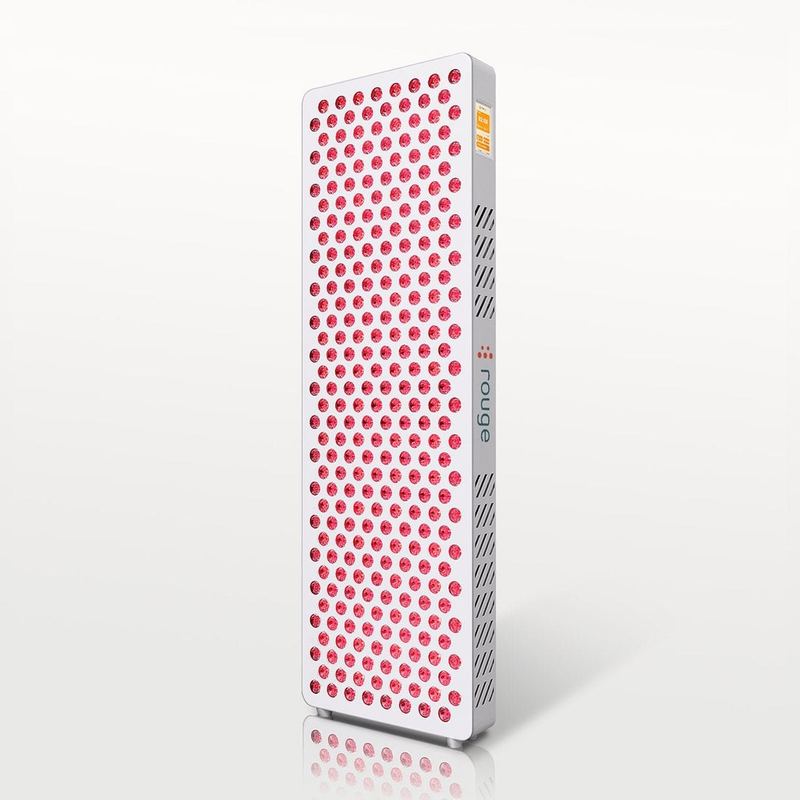
5Rouge Pro G4 product photo

Rouge Pro G4 ($1,121)

AmRank Score 84
Best for
Tweakers who want per-wavelength dimming, pulsing and preset programs
Score vs category
This product 84Category median 83
Price vs category
8wavelengths: 630–1060nm
288dual-chip LEDs
36.2″× 11.8″ panel
Makermanual: 150.9 solar / 81 laser-meter mW/cm² at 6″
ColorsSilver
Strengths
  • Widest wavelength set ranked — eight bands including 670nm and 1060nm
  • Per-wavelength dimming, 1–10,000 Hz pulsing and seven preset programs
  • Touchscreen, app and remote control included
  • Published US support phone line and a 3-year warranty
  • 60-day satisfaction guarantee
Watch out
  • Rouge’s own manual figures (150.9 solar / 81 laser-meter at 6″) sit below its product page’s 164 headline
  • 'Fat Loss' preset and fat-cell claims are wellness marketing, not evidence
  • Pricing is promotion-driven and swings by hundreds of dollars
  • Buyer pays return shipping, and stand and accessory sales are final — not returnable at all
Product review

The Rouge Pro G4 is the control enthusiast's panel: eight wavelengths (630/650/660/670/810/830/850/1060nm), per-wavelength dimming, pulsing from 1–10,000 Hz, seven preset programs, and touchscreen, app and remote control across 288 dual-chip LEDs. Rouge’s product page advertises 164 mW/cm² at 6 inches on a solar-meter basis, but the Pro G4’s own manual gives 150.9 mW/cm² by solar meter and 81 mW/cm² by the maker’s own laser meter — the manual governs, and 81 is still respectable. It is well supported — a published support phone line, a 60-day guarantee and a 3-year warranty — but Rouge's marketing undercuts it, with a 'Fat Loss' preset and copy claiming its 1060nm light breaks down fat cells.

The company

Rouge Care is a Canadian company selling into the US through rouge.care, with a published US support line (1 (877) 664-6484), a 60-day satisfaction guarantee that runs from the date of purchase (like-new condition in the original packaging, buyer pays all return shipping, and damaged items must be reported within 7 days of delivery) and a 3-year device warranty under its published policy. Its panels are sold as FDA-registered devices. The aggressive end of its marketing — a 'Fat Loss' preset and copy describing 1060nm light breaking down fat cells — goes well beyond wellness framing and costs it accountability points despite solid hardware and support.

Rouge Pro G4

6Joovv Solo 3.0 product photo

Joovv Solo 3.0 ($1,699)

AmRank Score 82
Best for
Design-led buyers who want the best app experience and a modular system
Score vs category
This product 82Category median 83
Price vs category
660nm+ 850nm only
150LEDs
Partial-bodypanel; expands modularly
Claimedoptical irradiance >100 mW/cm² (maker states no distance or instrument)
ColorsWhite
Strengths
  • Best-in-class app: session tracking, reminders, alarm and ambient modes
  • Premium build with a patented modular expansion path
  • Independently certified to IEC 60601 home-healthcare standards
  • Recovery+ pulsed mode and separate red/NIR control
  • Strong owner satisfaction and resale demand
Watch out
  • $1,699 for a partial-body panel; full-body coverage needs a second unit
  • Only two wavelengths (660/850nm)
  • Warranty is 2 years where close rivals offer 3
  • No published third-party irradiance report behind the >100 mW/cm² claim
Product review

The Solo 3.0 is the best-finished panel here: a slim white unit on Joovv's modular mounting system, with the category's most polished app — session tracking, an alarm mode, ambient light mode and the pulsed Recovery+ mode — and IEC 60601 home-healthcare certification through Intertek. What it is not is large or cheap: 150 LEDs cover a partial-body area, full-body setups need a second unit, and at $1,699 it is the joint-most-expensive panel ranked while offering only two wavelengths. Joovv quotes optical irradiance above 100 mW/cm² without publishing a third-party lab report, so that figure is scored as an unverified claim.

The company

Joovv, founded in 2015 and based in San Clemente, California, is the design-led premium brand in home light therapy, selling direct from joovv.com with financing through Affirm and HSA/FSA acceptance. Its 60-day return window is standard, but its 2-year warranty trails the 3-year cover offered by Mito, PlatinumLED and Hooga at lower prices. Joovv's devices are independently safety-certified and its marketing generally stays within wellness framing; it describes its panels as medical-grade without publishing the third-party output data that would let buyers verify performance claims.

Joovv Solo 3.0

7BlockBlueLight PowerPanel PRO product photo

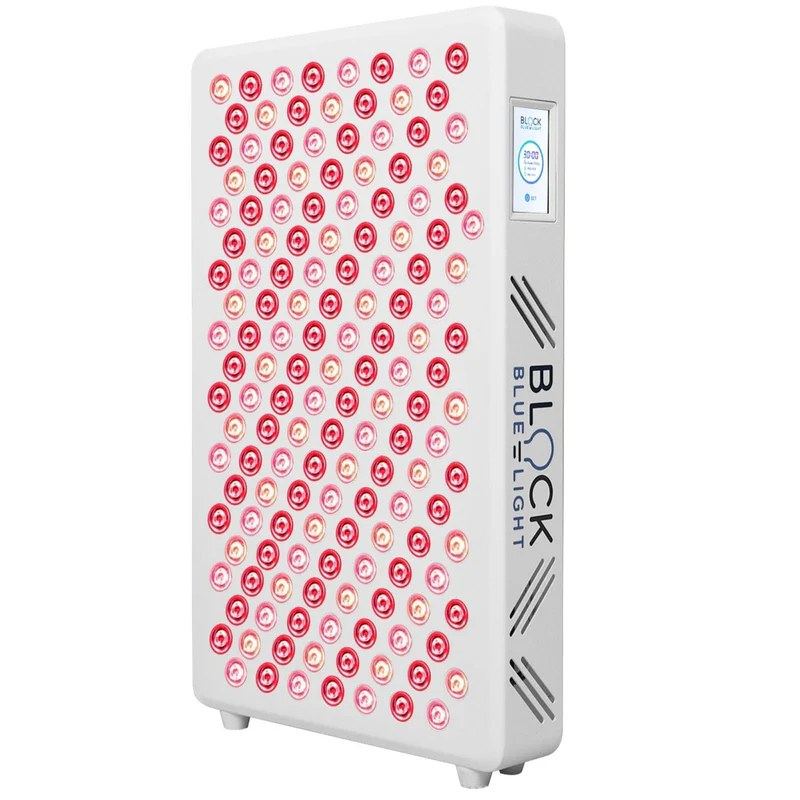
BlockBlueLight PowerPanel PRO ($900)

AmRank Score 81
Best for
Half-body buyers who want dual-published, honest irradiance figures
Score vs category
This product 81Category median 83
Price vs category
7wavelengths (Gen 6.0): 590–1060nm
150× 5W dual-chip LEDs
18.9″× 11.8″ half-body panel
160solar / 68 spectrometer mW/cm² at 6″ — both published
ColorsWhite
Strengths
  • Publishes both solar-meter (160) and spectrometer (68) figures at 6″, with the difference explained
  • Seven wavelengths with independent dimming and four custom presets
  • Touchscreen control and 1–10,000 Hz pulsing
  • 3-year warranty at a sub-$900 price
  • Flicker-free design with low-EMF engineering
Watch out
  • Half-body size (about 19″ tall) — not a one-session full-body panel
  • Its own product page still carries Gen 5 sections describing a different wavelength set
  • 30-day returns are shorter than the 60-day trials of US rivals
  • Offshore brand with no published US support phone
Product review

The PowerPanel PRO is a half-body panel with a flagship feature set: the current Generation 6.0 model runs seven wavelengths with independent per-wavelength dimming, pulsing to 10,000 Hz, four saveable presets and a touchscreen, from 150 dual-chip LEDs. Its spec honesty is the headline: BlockBlueLight publishes both its 160 mW/cm² solar-meter figure and its 68 mW/cm² spectrometer average at 6 inches, and states plainly that the solar number exists for competitor comparison. That transparency is rare and is scored accordingly. The limits are size — this is a torso panel, not a full-body one — and a product page that still mixes in Generation 5 copy describing the older five-wavelength set.

The company

BlockBlueLight is an Australia/New Zealand-based wellness brand selling into the US through blockbluelight.com, with a 3-year warranty and 30-day returns on the PowerPanel line. It does not publish a US support phone; support is handled online. Its claim discipline is a category bright spot: it is one of only two brands here that publish spectrometer-verified output next to the solar-meter number and explain the gap, and its devices are FDA-registered — though its PRO product page currently mixes Generation 6.0 specifications with older Generation 5 sections. US returns must be received within 30 days of delivery, the buyer pays return shipping, and a return missing accessories or packaging is rejected and reshipped at a $9.99 charge.

BlockBlueLight PowerPanel PRO

8MitoPRO 750X product photo
The Buck4Buck — best value in this category, American Ranking Institute award badge

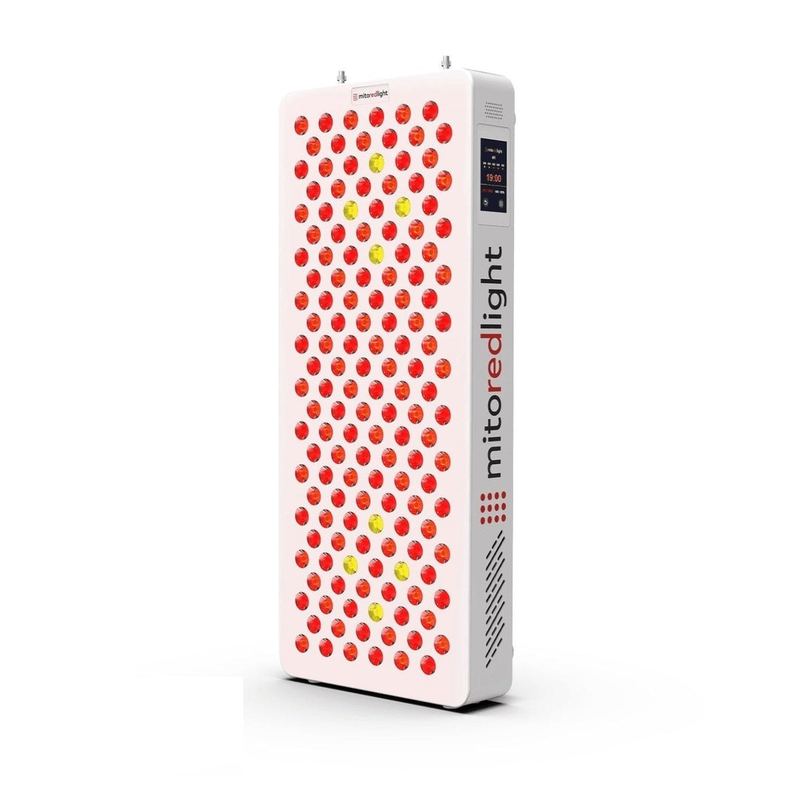
MitoPRO 750X ($749)

AmRank Score 80
Best for
Half-body buyers who want the 1500X's verified engineering for $550 less
Score vs category
This product 80Category median 83
Price vs category
6wavelengths: 590/630/660/810/830/850nm
150dual-chip lenses (300 chips)
10″× 23″ panel
>160solar at 6″ (maker table); accredited lab retest in progress
ColorsWhite
Strengths
  • Same six-wavelength X platform as the #1-ranked 1500X
  • Maker-published solar figure at 6″; the spectroradiometer figure awaits the pending accredited retest
  • 60-day trial, 3-year warranty and free US shipping
  • Touchscreen and app control at a mid-range price
  • Links with a 1500X later for a full-body array
Watch out
  • Half-body coverage — plan on two positions per full session
  • Independent lab retest was still pending on Mito's data page at review time
  • Stand sold separately ($139)
Product review

The 750X is the 1500X cut in half — the same X-series engineering in a 23-inch, upper-or-lower-body frame: six wavelengths, TruDUAL dual-chip lenses with independent red/NIR channels, touchscreen and app control, and the same 60-day trial and 3-year warranty. Mito's compare table quotes over 160 mW/cm² (solar) and over 70 mW/cm² (spectroradiometer) at 6 inches, but unlike its big sibling, the 750X's accredited lab retest was still listed as in progress — with no values published — on Mito's own data page, so the spectroradiometer figure is a marketing-table claim, not a lab result. At $749 it is the strongest half-body value from a top-tier maker, provided you accept repositioning between upper- and lower-body sessions.

The company

Mito Red Light, based in Scottsdale, Arizona and operating since 2019, sells the 750X direct with free US shipping, published phone (866-861-6486) and email support, a 60-day trial and a 3-year warranty. Its claim discipline is the best in the category — devices are described as FDA Class II registered, and solar-meter and spectroradiometer figures are printed side by side with an explanation of the difference. The one gap on this model: at review time, Mito's own lab-data page showed the 750X's accredited retest as still in progress, where the 1500X's report is complete and published.

MitoPRO 750X

9BestQool BQ150 product photo

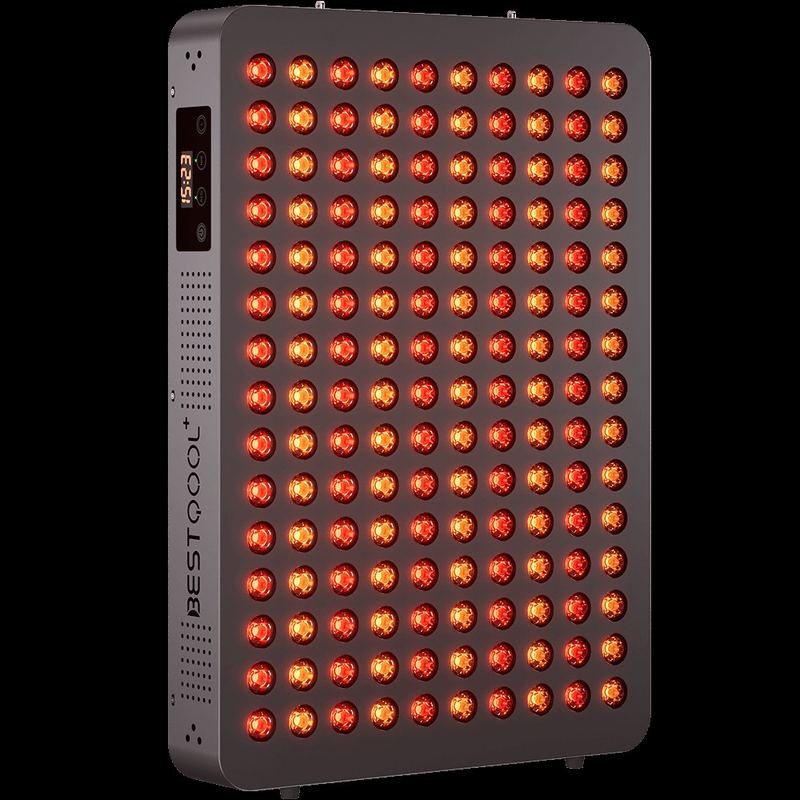
BestQool BQ150 ($519)

AmRank Score 73
Best for
Budget buyers who want a wide, low-cost starter panel
Score vs category
This product 73Category median 83
Price vs category
630/660/850/940nm
150dual-chip LEDs
21.3″× 14.3″ panel
96.2mW/cm² claimed at 3″ (not 6″)
ColorsBlack
Strengths
  • Widest budget panel ranked — 21.3″ across for torso coverage
  • Four wavelengths including 940nm at a $519 price
  • Modular splicing links two panels into a bigger array
  • Door hook, goggles and hanging hardware included
  • US warehouse stock with a 2-year warranty
Watch out
  • Irradiance is quoted at 3 inches, not the standard 6 — the number is not comparable to rivals'
  • Product page claims an FDA review process that 510(k)-exempt devices do not undergo
  • 30-day returns and no published US support phone
Product review

The BQ150 is the value outlier: a wide 21.3-inch panel with 150 dual-chip LEDs and four wavelengths (630/660/850/940nm) for $519, with modular splicing to link a second unit. Read its headline number carefully — 96.2 mW/cm² is quoted at 3 inches, half the standard distance, where output reads far higher than at the 6-inch distance rivals quote; at 6 inches expect a much lower figure, and no independent lab report is published. Ownership terms are thinner too: a 2-year warranty, 30-day returns and a rated LED lifespan of just 10,000+ hours. It earns its place on price and width, not on verified output.

The company

BestQool is a China-based, direct-to-consumer brand selling through bestqool.com and Amazon, with US-warehouse stock of the BQ150 at $519; it publishes no US support phone, and service is handled online. The BQ150 carries a 2-year warranty and 30-day returns. Claim discipline is the weak point: the product page describes the device as an 'FDA Class II Medical Device, 510(k) Exempt' that has 'undergone rigorous review by the FDA' — exempt devices are not reviewed by the FDA — alongside percentage-based user-result claims that no panel maker should present as data. The maker offers a free third warranty year to buyers who apply within 14 days of delivery; returns carry buyer-paid shipping and a $25 fee for incomplete packaging, and refurbished units are non-refundable with a 1-year warranty.

BestQool BQ150

10GembaRed Beacon product photo
The Buck Blazer \u2014 lowest price in this category, American Ranking Institute award badge

GembaRed Beacon ($459)

AmRank Score 68
Best for
Measurement purists who want published, averaged output and near-zero EMF
Score vs category
This product 68Category median 83
Price vs category
630/660/830/850nm
54LEDs, 30° lenses
13.4″× 8″ panel
24mW/cm² average at 6″ (published average, not peak)
ColorsWhite
Strengths
  • Publishes averaged output figures by distance instead of peak marketing numbers
  • Professionally measured 0.9% flicker; near-zero EMF even at the panel surface
  • Fanless and silent, with a built-in stand and external DC adapter
  • 50,000-hour rated life and a metal enclosure at $459
  • Wellness-only claims — no disease promises, no FDA-clearance language
Watch out
  • Lowest output ranked (24 mW/cm² average at 6″) — sessions run long
  • Small 13.4″ × 8″ treatment area covers one body zone at a time
  • 2-year warranty, no published trial period and no support phone
  • The full-body Reboot it replaces in spirit has been discontinued
Product review

The Beacon is the anti-marketing panel. GembaRed publishes average intensity computed from the panel's total optical output — 24 mW/cm² at 6 inches — rather than a center-point peak, professionally measures its flicker at 0.9%, and designs for near-zero EMF with an external DC adapter and no fans, so it can even be used at contact distance. The honesty is real; so are the limits: 54 LEDs in a 13.4-inch frame cover one targeted area at a time, and the output is the lowest here by design. Note that GembaRed's full-body Reboot panel has been discontinued — the Beacon is the brand's current distance-treatment model.

The company

GembaRed LLC is a small US company founded in 2018 by Andrew LaTour, selling direct from gembared.com with free US shipping (it does not ship internationally); its panels are made in China, carry a 2-year limited warranty, and no formal trial period or support phone is published. Its claim discipline is the industry's conscience: GembaRed publishes averaged intensity tables by distance, professionally measured flicker and EMF data, and an explicit guide to how competitors inflate irradiance — and it makes no FDA-clearance claims for its general-wellness panels.

GembaRed Beacon

The verdict

If you buy one panel, buy the MitoPRO 1500X: it is the only flagship whose maker publishes an accredited lab report next to its marketing numbers, and its verified output, six wavelengths, 60-day trial and 3-year warranty justify the top score. Spec-sheet shoppers should treat every mW/cm² claim in this category as the start of a question, not an answer — ask at what distance, with what meter, and whether an independent lab has confirmed it. Buyers on a budget give up output and coverage, not honesty: the Hooga PRO1500 and the GembaRed Beacon both publish numbers that survive scrutiny.

Questions, answered

Why do advertised irradiance numbers differ so much from independent tests?

Most brands quote peak readings from consumer solar meters, which respond to the whole light spectrum and read high, taken at the panel's single brightest point. Spectroradiometers — the instruments accredited labs use — isolate the actual red and near-infrared output and typically report one-third to one-half of the solar-meter figure at the same distance. Distance matters just as much: output falls steeply as you step back, so any irradiance claim without a stated measurement distance is meaningless.

How far should I stand from a panel, and for how long?

Follow the maker's guidance for your panel. Most recommend roughly 6–18 inches for 10–20 minutes per area; wider distances trade intensity for coverage, which is why several brands design sessions around 12–24 inches. Shorter, consistent sessions beat occasional marathon ones, and eye protection should be worn whenever a panel's near-infrared output is on, since that light is invisible.

Which wavelengths matter most?

The 660nm red and 850nm near-infrared pairing is the most studied combination and anchors most panels here. Broader-spectrum models add wavelengths such as 630nm, 810nm, 830nm or 1060nm; that widens the spec sheet, but it has not been shown to multiply results. Verified output at your session distance and the area a panel actually covers matter more than the wavelength count.

Are these panels FDA approved?

No home wellness panel is FDA 'approved.' Some brands hold FDA establishment registration or Class II device listings, which are narrower statuses than clearance or approval, and general-wellness panels may not require any of them. Each review below states what the brand actually holds versus what its marketing implies.

What trial period and warranty should I expect?

The stronger brands in this ranking — Mito, PlatinumLED, Hooga and Rouge — offer 60-day home trials and 3-year warranties. BlockBlueLight pairs a 3-year warranty with a shorter 30-day return window. Shorter 30-day windows, returns accepted only unopened, or 2-year warranties (Joovv, EMR-Tek, BestQool, GembaRed) are scored down in our accountability rating, because a panel you cannot try is a panel you are guessing about.

Prices are typical US street prices observed during research and change often — check the retailer for the current price. AmRank may earn a commission from links on this page; commissions never change a score. See the affiliate disclosure and methodology.

Back to top